
The Indian government has introduced a 0.4% transaction fee on Unified Payments Interface (UPI) payments exceeding Rs 2,000 for merchants, effective October 15, marking the end of nearly six years of free service. Person-to-person transfers and small-value transactions below Rs 2,000 remain free. The new Merchant Discount Rate (MDR) is capped at Rs 300 for transactions above Rs 75,000, with differentiated rates for essential sectors and investments, and safeguards to prevent costs from being passed to consumers.

A two-day weekend would help employees recover physically and mentally. They would return better prepared for branch work that demands patience, judgment, and accuracy, asserts Tamal Bandyopadhyay.

The National Payments Corporation of India (NPCI) stated that the Merchant Discount Rate (MDR) "is distributed only amongst the UPI ecosystem, to further invest into infrastructure resilience, innovation, cybersecurity (protecting the UPI infrastructure with banks and non-banks) and customer service."
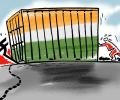
The United States and the European Union have strongly criticised India's trade policies at the World Trade Organization review, highlighting concerns over high tariffs, quality-control orders (QCOs), and restrictions on digital trade and services, which they argue undermine India's economic openness.

The Indian government has introduced a 0.4% Merchant Discount Rate (MDR) on UPI person-to-merchant (P2M) transactions exceeding Rs 2,000, effective October 15. This move ends nearly six years of fully free UPI payments, though person-to-person (P2P) transfers and small P2M payments remain free. The charges aim to bolster investment in UPI infrastructure, with specific exemptions and caps for essential sectors.
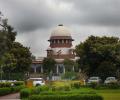
The Supreme Court has indicated that its judges may personally visit the National Testing Agency (NTA) to examine its upgraded facilities aimed at preventing recurring NEET paper leaks. This unusual move underscores the court's emphasis on institutional strengthening and permanent solutions. The NTA informed the bench that it has overhauled its system, while a high-powered panel is also working on structural reforms to ensure foolproof examination processes.

Minister of State for Telecom Chandra Sekhar Pemmasani urged BRICS nations to collaborate on building institutional capacity and advocating for fair standards in international telecom and ICT bodies. He highlighted India's willingness to share its modular, open-source digital public infrastructure frameworks like Aadhaar and DigiLocker, emphasising their role in sustainable development and economic growth across the Global South.

The government is introducing a 0.4% Merchant Discount Rate (MDR) on UPI person-to-merchant payments above Rs 2,000, effective October 15. This move ends the zero-MDR regime, aiming to fund UPI infrastructure and sustainability, as the previous government subsidy was insufficient to cover operational costs. Payments between individuals and most everyday merchant transactions will remain free.

The top 500 listed companies had 860 women directors or board members overall.

GIS intelligence solutions provider Mirai Aerospace Systems and Software Solutions has signed an MoU with US-based GreenValley International Inc to strengthen India's geospatial and LiDAR remote sensing manufacturing base. The collaboration focuses on local assembly, manufacturing, technical support, and the development of AI-driven LiDAR applications, aiming to meet India's growing demand across various sectors.

The political confidence required to place high-end Japanese aircraft and personnel on Indian soil is itself a data point.
It indicates a level of trust that would have been difficult to imagine when India-Japan defence ties were largely symbolic, explains Varun Arya.

Phishing sites mimicked SBI, ICICI Bank and Axis Bank to steal card details and OTPs.

The Jammu Municipal Corporation has launched an integrated system combining AI-based road monitoring with cold emulsion pothole patching machines. This initiative aims to ensure timely and scientific repair of damaged roads across the city, leveraging modern technology to identify and fix defects efficiently, especially before the monsoon season. The AI system also detects other civic issues, promoting smart urban governance.

The fiscal consolidation path and Rs 1 trillion stabilisation fund provide room to absorb mild shocks, but sustained oil-price increases pose risks.

Quantum computing is set to redefine artificial intelligence, cybersecurity, and scientific discovery, promising unprecedented speeds and capabilities while also necessitating urgent development of quantum-safe security measures and strategic enterprise readiness, says Sunil Varghese.

'Once the numbers come out, they fear that the OBCs would start to demand, and articulate what they are lacking, why they are lacking and what should be done to go forward.'

The White House has released a framework for artificial intelligence, focusing on empowering parents to manage their children's digital environment and advocating for federal leadership to promote innovation and address policy challenges.
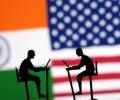
A think tank, GTRI, has urged India to resist US pressure regarding its UPI policies, advocating for the defence of competition, policy autonomy, and the long-term sustainability of its payments ecosystem. This comes as the Lok Sabha passed a bill allowing charges on UPI transactions, a move GTRI suggests should not be influenced by foreign trade complaints.

Onestruction Inc and DataKaveri Systems have signed an MoU to establish a framework for strategic and technical collaboration in urban and built environment data exchange.

Economists highlight that resolving domestic policy bottlenecks, particularly through land reforms and improving the ease of doing business, will be critical for Prime Minister Narendra Modi's 'next-generation reforms' and India's economic transformation towards its 'Viksit Bharat' vision for 2047.
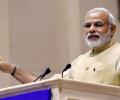
Prime Minister Narendra Modi, in his Independence Day address, highlighted technology and innovation as central to India's goal of becoming a developed nation by 2047. He called for India to lead in emerging technologies like AI, quantum computing, and space, announcing a massive AI skilling initiative for one crore youth. Modi stressed the importance of becoming a global innovation hub, bolstering energy security with nuclear power, and strengthening cybersecurity.

Prime Minister Narendra Modi cautioned against the 'weaponisation' of technology and critical minerals at the BRICS summit, advocating for cooperation to foster shared prosperity. Concurrently, Chinese President Xi Jinping announced plans for an open-source AI ecosystem for BRICS nations, positioning Beijing as a key technology partner amid global AI competition.

Enforcement agencies have highlighted risks related to money laundering and terror financing, prompting closer scrutiny of crypto platforms operating in India.

Bank fraud is no longer just an external cyber threat -- insiders with legitimate access can exploit banking systems, trusted credentials and institutional blind spots to quietly siphon money.

'The trigger for the flood was definitely natural, but the damage that it caused was human-made.'

'Improved law and order and transparent governance have helped change UP's investment image.'
A three-day conference, "Dharma in the Digital Age 2026," is taking place at the University of Houston, bringing together scholars and scientists to discuss how ancient Dharmic principles can address contemporary ethical, technological, and societal challenges, including AI, digital governance, and sustainability.

The Department of Personnel and Training (DoPT) in India is actively integrating artificial intelligence (AI) into government processes to enhance efficiency, transparency, and accuracy. Initiatives include AI-enabled solutions for salary processing, grievance handling, and training content development, with a focus on data security and ethical use.
ServiceNow has announced an expansion of its AI Control Tower offering with new capabilities that give enterprises control over every AI system, agent, and workflow, regardless of where it runs.

'You have to get private investment to somewhere between 35% to 36% of GDP. It is hovering about 30%-31%.'
Union Health Minister J P Nadda has emphasised the need for sound regulation, ethical oversight, and equity in the application of Artificial Intelligence (AI) to healthcare, speaking at the World Health Assembly in Geneva.

The All India Football Federation (AIFF) has approved the adoption of the National Sports Governance Act but deferred a decision on picking a new commercial partner for the Indian Super League (ISL) during its Special General Body Meeting.
Experts at a discussion in Delhi emphasised the importance of ethical governance and indigenous capability in India's pursuit of becoming a global artificial intelligence power, ensuring technology serves the public good and maintains strategic autonomy.

The Indian government has defended its E20 ethanol blending programme, stating that extensive testing and field experience show no evidence of abnormal engine wear, corrosion, or reduced vehicle life, despite a potential 2-6% reduction in fuel economy.

India has established a high-level inter-ministerial body, the AI Governance and Economic Group (AIGEG), to steer the country's national AI governance strategy. The AIGEG will coordinate policy across ministries and oversee cross-sectoral governance issues, supported by a Technology and Policy Expert Committee (TPEC).

Whether you're politically active or simply an everyday internet user, these are ten digital traps worth understanding.

A sophisticated cross-bank syndicate is systematically defrauding non-resident Indians (NRIs) and elderly citizens by exploiting their fixed deposits through forged documents and fictitious loans, often involving colluding bank employees and real estate deals.

Bharti Airtel, India's second-largest telecom operator, reported a 37.3 per cent rise in consolidated net profit to 8,167 crore for Q1 FY27, driven by the addition of high-paying premium customers, despite missing Bloomberg consensus estimates.

The Indian government has summoned Meta's global head of public policy after Prime Minister Narendra Modi's Facebook post, addressing youth and promising action against paper leaks, was temporarily removed. Meta attributed the removal to a 'glitch' in its automated content filters, an explanation the government deems insufficient, demanding further discussions.

The Congress and BJP are engaged in a political spat over the implementation of the Women's Reservation Bill and its proposed link to delimitation, with Rahul Gandhi urging unconditional implementation of the 2023 law and Kiren Rijiju highlighting the constitutional requirement for delimitation based on post-2026 census figures.
